You're viewing a lighter version due to slow connection
Salkantay Trek to Machu Picchu 2026
Trek beneath the imposing glaciers of Mount Salkantay the "Wild Mountain" through five extraordinary days of cloud forest, high mountain passes, turquoise lakes, and tropical valleys, all leading to the legendary citadel of Machu Picchu.
What Is the Salkantay Trek?
The Salkantay Trek is the most popular alternative to the Classic Inca Trail and one of the most spectacular multi-day treks in all of South America. Named after Apu Salkantay meaning "Wild Mountain" or "Savage Mountain" in Quechua the route passes beneath the permanent glaciers of Mount Salkantay (6,271 m), the second highest peak in the Cusco region and one of the most sacred mountains in Andean cosmology.
Unlike the Inca Trail, the Salkantay Trek does not require advance permits and remains open year-round, including in February when the Inca Trail is closed for maintenance. This makes it an excellent option for travelers with flexible or last-minute plans. The classic route covers approximately 74 km over 5 days and 4 nights, traversing five distinct ecological zones from high-altitude puna grasslands and glacial valleys to dense cloud forest and subtropical jungle before arriving at Aguas Calientes and ultimately Machu Picchu.
In 2004, National Geographic's Adventure magazine ranked the Salkantay Trek among the top 25 treks in the world a recognition that helped transform it from a local secret into a globally celebrated hiking experience. Today it draws thousands of trekkers each year, yet its remoteness and length ensure it never feels crowded.
Key facts at a glance: 74 km · 5 days / 4 nights · Max altitude 4,600 m (Salkantay Pass) · No permit required · Open year-round · Ends at Machu Picchu · Difficulty: Moderate to Hard.
🏔️ Mount Salkantay
At 6,271 m above sea level, Salkantay is the highest peak in the Vilcabamba mountain range. The Incas considered it an Apu a mountain deity and made offerings at its base. Trekking beneath its glaciers at the 4,600 m pass is one of the most awe-inspiring moments in Andean trekking.
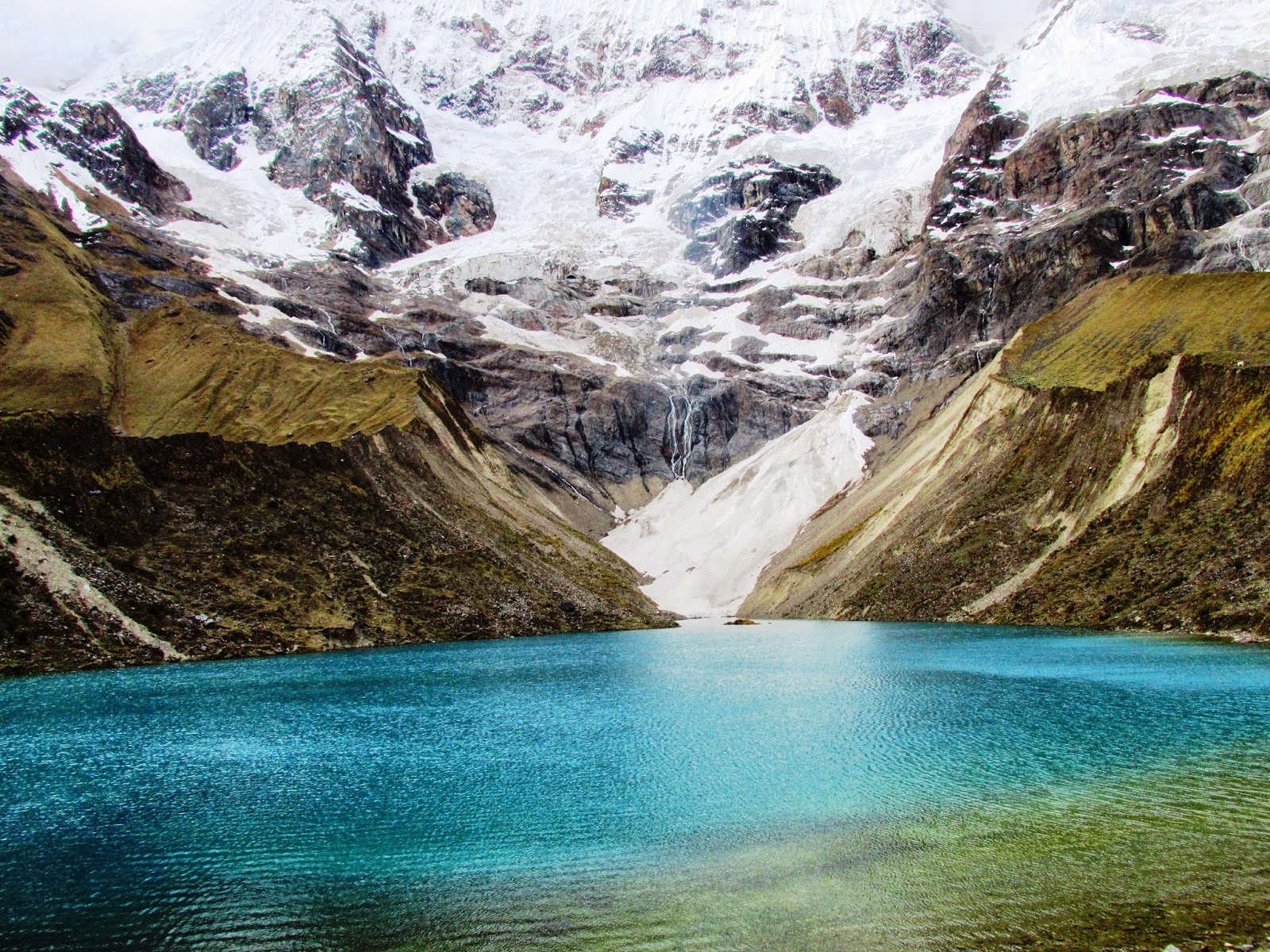
💎 Humantay Lake
An optional (but highly recommended) side trip on Day 1 leads to Laguna Humantay a glacial lake of extraordinary turquoise-blue color nestled at 4,200 m at the foot of Mount Humantay. The 2-hour roundtrip hike is steep but the views are among the most dramatic of the entire trek.
🌿 Five Ecosystems
In five days the Salkantay Trek crosses puna grassland, glacial terrain, cloud forest, and subtropical jungle before reaching Aguas Calientes. No other trek in the region offers this level of ecological diversity. Flora changes dramatically each day from hardy Andean grasses and orchids to banana trees and coffee plantations near Santa Teresa.
♨️ Hot Springs at Santa Teresa
After Day 3's long descent, trekkers arrive at Santa Teresa, a small jungle town known for its natural thermal hot springs (Cocalmayo). Soaking sore muscles in the warm mineral waters after two hard days of trekking is one of the most anticipated highlights of the entire route.
🎯 No Permit Required
Unlike the Inca Trail, the Salkantay route does not require a government-issued permit tied to a specific date. This means you can book closer to your travel date without worrying about availability. However, booking your tour package in advance is still recommended during the peak May–August season.
📏 Altitude Profile
The trek starts at Mollepata (2,800 m), rises to the Salkantay Pass at 4,600 m on Day 2, then descends all the way to Aguas Calientes at 2,040 m by Day 4. The altitude change is dramatic proper acclimatization in Cusco (3,400 m) for at least 2 days before starting is strongly recommended.
Showing 1 Salkantay Trek tours
DifficultFrom $519 USD
Classic Salkantay Trek to Machu Picchu
5 Days / 4 Nights
Difficult
Discover the Salkantay Trek Tour: an adventure through the Andes to Machu Picchu, with impressive views of Salkantay. An unforgettable experience!
The classic Salkantay Trek begins with a pre-dawn departure from Cusco and takes you through an extraordinary progression of landscapes, each day more dramatic than the last.
Day 1: Cusco → Mollepata → Soraypampa (2,800 m – 3,900 m)
A 3-hour drive from Cusco to Mollepata, then a gradual trek up to the high camp at Soraypampa. The Salkantay and Humantay peaks dominate the horizon. In the afternoon, those with energy can make the steep 2-hour roundtrip hike to Humantay Lake a glacial jewel at 4,200 m with a view that rarely disappoints. Camping at Soraypampa beneath the stars and glaciers.
Day 2: Soraypampa → Salkantay Pass (4,600 m) → Chaullay (2,900 m)
The hardest and most spectacular day. An early start to reach the Salkantay Pass at 4,600 m the highest and most dramatic point of the entire trek. The panoramic views of glaciers, alpine lakes, and the Apurímac valley below are unforgettable. A long but exhilarating descent through changing vegetation to the campsite at Chaullay (or Wayracmachay), where the air grows noticeably warmer and thicker.
Day 3: Chaullay → La Playa → Santa Teresa (2,100 m)
A beautiful walk through cloud forest alongside the Totora River, passing coffee and fruit plantations as the altitude drops and the vegetation turns lush and tropical. The route passes through the village of La Playa before arriving at Santa Teresa. The afternoon is spent recovering at the famous Cocalmayo hot springs naturally heated mineral pools surrounded by jungle. One of the most celebrated moments of the entire trek.
Day 4: Santa Teresa → Aguas Calientes (2,040 m)
A shorter but varied day. Trekkers follow the Urubamba River valley, with options to walk the train tracks through the jungle canyon or take a local transport to the hydroelectric plant and complete the final 10 km on foot along the railway line to Aguas Calientes the gateway town to Machu Picchu. The evening is free to explore the town's thermal baths, restaurants, and markets. First glimpse of Machu Picchu Mountain looming above the clouds.
Day 5: Machu Picchu (2,430 m)
The reward for five days of effort. An early bus from Aguas Calientes carries trekkers up the winding road to the entrance of Machu Picchu, where a professional guide leads a 2-hour tour of the citadel. Time is then given for personal exploration. Optional hike to Sun Gate (Inti Punku) for those wishing to connect with the Inca Trail's final stretch. Return to Cusco by afternoon train.
Best Time to Do the Salkantay Trek
Unlike the Inca Trail, the Salkantay Trek is open all year round. However, the season you choose significantly affects conditions at the high pass and in the cloud forest sections.
May – June
⭐ Best season dry, clear skies, lush post-rain vegetation. Perfect conditions at the pass.
July – August
⭐ Peak season driest and most stable weather. Coldest nights at high camp (~-5°C). Most popular months.
September – October
✅ Shoulder season fewer trekkers, occasional afternoon showers, still very good conditions overall.
April
✅ End of rainy season the mountains and valleys are intensely green. Some muddy sections possible.
Nov – Jan
🌧️ Rainy season possible daily rain. Trail can be muddy and slippery. Lower demand, lower prices.
February – March
🌧️ Wettest months heavy rains possible. The trek remains open (unlike Inca Trail), but conditions are challenging.
Advantage over the Inca Trail: The Salkantay Trek stays open in February when the Inca Trail is fully closed. If you must travel in February, the Salkantay is your best trekking option to reach Machu Picchu on foot.
What to Pack for the Salkantay Trek
👟 Footwear & Layers
Waterproof hiking boots are essential Day 2 near the pass can involve snow or ice patches. Pack light base layers, a warm insulating jacket, and a waterproof shell. You'll go from near-freezing at the pass to tropical heat by Day 3, so layering is key. Flip-flops or sandals for the hot springs.
🎒 Gear & Pack
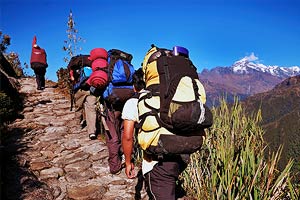
A daypack of 20–30L is ideal (your main duffel is carried by mules or porters up to 8 kg). Trekking poles are highly recommended especially for the steep descent from the Salkantay Pass. A headlamp with fresh batteries, gaiters for muddy sections, and a lightweight microfiber towel.
🛌 Sleeping Gear
Bring a sleeping bag rated to -10°C nights at Soraypampa (Day 1 camp at 3,900 m) can drop well below freezing. Many operators provide tents and sleeping mats, but confirm with your agency. A thin silk or fleece liner adds extra warmth and comfort.
🧴 Health & Protection
High-SPF sunscreen and UV sunglasses for the open high-altitude sections. Insect repellent from Day 3 onwards as the route enters cloud forest and jungle. Personal altitude medication (consult your doctor), ibuprofen or acetaminophen, blister plasters, and a small personal first aid kit.
💧 Hydration
Drink at least 2–3 litres per day, especially on Day 2 approaching the pass. Water sources are available along the route carry purification tablets or a filter. Coca leaves or coca tea are widely used by trekkers to manage altitude symptoms and are available at the camps.
🍫 Snacks & Energy
All main meals are included in the tour package, but personal snacks are invaluable on long days. Energy bars, chocolate, dried fruit, nuts, and electrolyte tablets are highly recommended for the pass crossing on Day 2. Bring more than you think you'll need.
Other Ways to Reach Machu Picchu
If you're exploring your options beyond the Salkantay Trek, here are the main alternatives each with its own character, difficulty, and highlights.
Route
Duration
Max. Altitude
Difficulty
Key Feature
🪨 Classic Inca Trail
4 days / 3 nights
4,215 m
Moderate – Hard
The original Inca road with multiple archaeological sites (Wiñay Wayna, Sayacmarca, Phuyupatamarca). Permits required sell out months in advance. Closes in February.
🌿 Lares Trek
4 – 5 days
4,400 m
Moderate
The cultural trek. Passes through traditional Andean weaving communities, volcanic hot springs, and alpaca grazing valleys. Less focused on ruins, more on living indigenous heritage. Ends at Ollantaytambo then train to Aguas Calientes.
🚂 Train from Ollantaytambo
1 day
2,430 m
Easy
The most accessible option. Scenic train through the Sacred Valley and Urubamba canyon to Aguas Calientes, then bus to Machu Picchu. Ideal for those with limited time or physical constraints. Available year-round.
Not sure which route is right for you? Our team at Viajes Machupicchu Travel can help you choose based on your fitness level, travel dates, and interests. Contact us we've been guiding travelers to Machu Picchu for years and know every trail by heart.
Certifications
ISO 9001:2015
Commitment to quality. We are certified with ISO 9001, ensuring excellence in our
services.
ISO 14001:2015
We prioritize environmental sustainability by reducing our impact on the
planet.
Official Operator
Official travel agency and tour operator. Unique and high-quality experiences.
Traveler’s Choice 2026
Recognition of our dedication and excellence in travel experiences.
Recommended by
Information Before Traveling to Machu Picchu
Trips to Machu Picchu, Cusco Tour Packages include hotels, guides, transportation, trains, entrance fees, museums, and transfers.