Origin and History of Inti Raymi
Inti Raymi meaning "Festival of the Sun" in Quechua was the most important religious ceremony of the Inca Empire. Celebrated during the winter solstice of the Southern Hemisphere (June 24), it honored Inti, the Sun God and the supreme deity of Tawantinsuyo. The Incas believed that without Inti's favor, the crops would fail and life would cease.
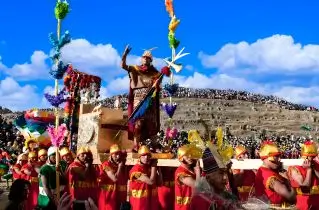
The ceremony was established by Sapa Inca Pachacutec around 1430 AD the same ruler who ordered the construction of Machu Picchu. During Inti Raymi, the Inca himself led the ritual offerings, surrounded by high priests, nobles, warriors, and thousands of subjects who traveled from across the empire to Cusco, the Navel of the World (Qosqo).
The Spanish conquistadors banned the ceremony in 1572, viewing it as a pagan practice incompatible with the Catholic faith they sought to impose. For nearly four centuries, Inti Raymi existed only in the memories of the Andean people and in the chronicles of historians such as Inca Garcilaso de la Vega.
The Revival: How Inti Raymi Returned to Cusco
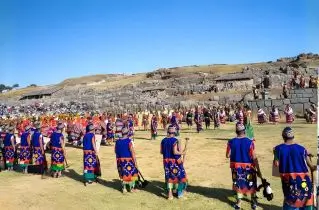
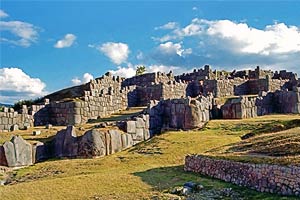
In 1944, Peruvian writer, actor, and cultural activist Faustino Espinoza Navarro undertook a meticulous historical reconstruction of the ceremony based on colonial chronicles and ethnographic research. On June 24 of that year, Inti Raymi was performed again for the first time in 372 years at Sacsayhuaman fortress, drawing thousands of spectators.
Since then, the celebration has grown into one of the most important cultural events in South America. Today it is managed by EMUFEC (Municipal Festival Company of Cusco) and draws over 100,000 visitors from around the world each year. It has been declared a Cultural Heritage of the Nation by the Peruvian government.
June 24th, 2026 Mark your calendar. The ceremony begins at Qoricancha at 8:00 AM, continues at Plaza de Armas, and culminates with the grand spectacle at Sacsayhuaman from 1:00 PM onwards. Tickets sell out months in advance.
The Ceremony: Three Stages
The Inti Raymi unfolds across three iconic locations in Cusco, each representing a different aspect of Inca cosmology:
🌅 8:00 AM: Qoricancha (Temple of the Sun)
The ceremony opens at Qoricancha, the "Great Enclosure of Gold," once the most sacred temple in the Inca Empire. The Inca greets the rising sun and performs the first offerings. Actors dressed in traditional Inca attire reenact the original rituals with remarkable detail.
🏛️ 10:00 AM: Plaza de Armas (Main Square)
The procession moves to the heart of Cusco, where the Inca bestows the Sun's blessing upon the city's authorities. The plaza fills with color, music, and the chants of the Inca's court. Free for all to attend and observe.
☀️ 1:00 PM: Sacsayhuaman Fortress
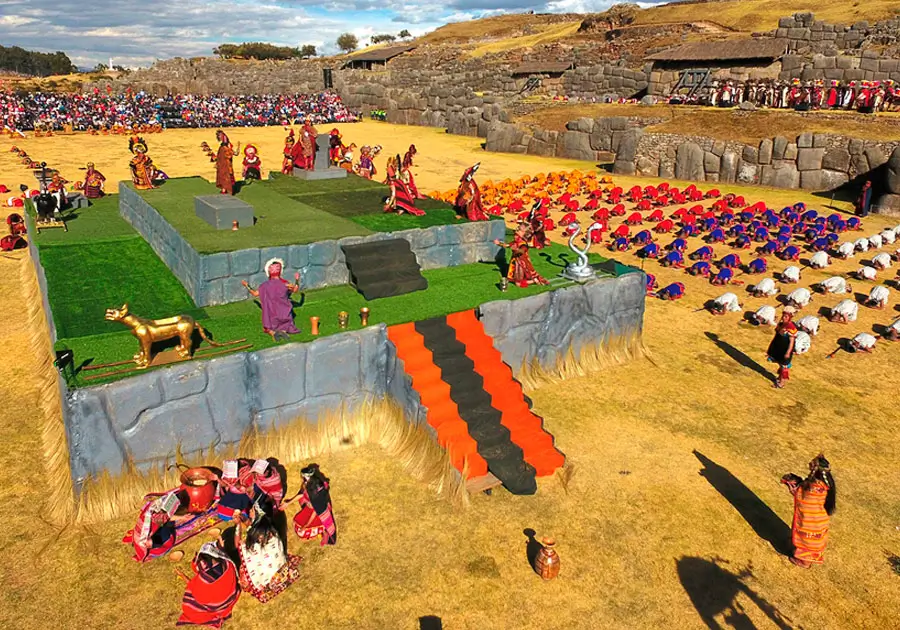
The grand finale. Thousands of spectators fill the grandstands of this massive Inca fortress overlooking Cusco. Traditional dances, symbolic offerings, Quechua chants, and the dramatic coronation of the Sun reach their peak. This is the main ticketed event.
What Happens in Cusco Around Inti Raymi
The days surrounding June 24th transform Cusco into a living festival. Beyond the official ceremony, the city overflows with spontaneous celebrations, traditional food, music, and a spirit that is uniquely Andean.
🥔 Huatia
One of the most ancient Andean culinary traditions. Potatoes, sweet potatoes, and other tubers are cooked underground using hot stones and earth a technique dating back to pre-Inca times. Families gather in open fields on the outskirts of Cusco to enjoy this communal feast, especially in the days leading up to the solstice.
🍓 Frutillada
A festive drink made from chicha (traditional fermented corn beer) blended with fresh strawberries from the Sacred Valley. It is served cold in large clay cups and can be found at almost every market stall and street corner in Cusco during the June festivities. Sweet, slightly tart, and unmistakably Andean.
🚶 Walk from the City to Sacsayhuaman
A beloved local tradition: thousands of people walk from the historic center of Cusco uphill to Sacsayhuaman on the morning of June 24th. The route follows ancient Inca paths through the San Blas neighborhood. It takes about 30–40 minutes and offers breathtaking views of the city below. A truly immersive experience.
🎶 Street Music & Processions
Folkloric bands, traditional dance groups (comparsa), and spontaneous performances take over the streets. The sounds of the siku (panpipes), charango, and bombo fill the air day and night. Many neighborhoods organize their own miniature Inti Raymi events in local plazas.
🌽 Traditional Markets
Artisan fairs and food markets pop up throughout the city. San Pedro Market and the Plaza de Armas area become especially vibrant. Look for chicha morada, mazamorra, cuy (guinea pig), and an incredible variety of Andean products.
🏘️ Neighborhood Celebrations
Each district of Cusco (San Blas, San Cristóbal, Santa Ana) celebrates with its own version of the festival, often centered around local patron saints that blend Catholic and Andean traditions. Fireworks at night are common and spectacular viewed from the hillsides.
Nearby Festivity: Corpus Christi
If you plan to visit Cusco for Inti Raymi, consider arriving a couple of weeks earlier to catch Corpus Christi another extraordinary event that typically falls in early to mid June (60 days after Easter Sunday).
During Corpus Christi, the statues of 15 saints and virgins from churches across the Cusco region are carried in grand processions through the streets to the Cathedral on the Plaza de Armas, where they "meet" for several days. This event is a remarkable blend of Catholic faith and Andean spirituality many of the saints are believed to represent pre-Columbian deities in disguise, a phenomenon historians call syncretism.
The celebration also features the famous Corpus Christi food market outside the Cathedral, where chiriuchu a cold dish of guinea pig, corn, cuy charki, dried seaweed, and spicy sausage is the must-try food of the season.
Travel tip: The combination of Corpus Christi + Inti Raymi makes June the single most culturally rich month to visit Cusco. Plan for at least 7–10 days and book accommodation well in advance hotels fill up fast.
Inti Raymi Around the World
While Cusco remains the undisputed heart of Inti Raymi, the Festival of the Sun is also celebrated in various forms across several Andean nations where the legacy of the Inca Empire lives on.
| Country |
Location |
Highlights |
🇵🇪 Peru
(Main celebration) |
Cusco - Sacsayhuaman |
The largest and most authentic reenactment. Over 700 actors, 100,000+ spectators. UNESCO-recognized intangible heritage. June 24th. |
| 🇧🇴 Bolivia |
Tiwanaku, near Lake Titicaca |
Celebrated at the ancient ruins of Tiwanaku, a pre-Inca site. The winter solstice sunrise over the iconic Gateway of the Sun draws thousands. Strong indigenous community participation. |
| 🇪🇨 Ecuador |
Otavalo, Ibarra, Imbabura Province |
Known locally as Inti Raymi or San Juan Fiesta. Indigenous Kichwa communities celebrate with ritual bathing in waterfalls, traditional dance competitions (danzantes), and community feasts. One of Ecuador's most vibrant indigenous events. |
| 🇦🇷 Argentina |
Jujuy, Salta, and other Andean provinces |
Communities of Andean heritage observe the solstice with ceremonies blending indigenous and colonial traditions. Growing in visibility as part of the indigenous cultural revival movement. |
| 🇨🇱 Chile |
Atacama Region, northern communities |
Aymara and Quechua communities in northern Chile, particularly around San Pedro de Atacama, celebrate the solstice with ancestral rituals. Known locally as Machaq Mara (Aymara New Year). |
| 🇨🇴 Colombia |
Nariño Department (southern highlands) |
Communities with Inca heritage celebrate a version of the solstice festival, often combined with local patron saint festivities in June. |
Despite its international spread, no celebration rivals Cusco's Inti Raymi in scale, historical authenticity, or spectacle. The combination of the Sacsayhuaman fortress, the Quechua language, the Inca costumes, and the sheer number of participants makes the Cusco ceremony a once-in-a-lifetime experience.


 Easy
From $300 USD
Easy
From $300 USD