Paucartambo at a Glance
Tucked into a narrow valley on the eastern slopes of the Andes, Paucartambo is one of the most distinctive towns in the Cusco region equal parts colonial time capsule and frontier outpost on the road to the Amazon. Whitewashed houses with blue balconies line its cobblestone streets, and the Mapacho River cuts through the valley below.
| Fact |
Detail |
| Altitude |
Approximately 2,906 meters (9,534 feet) above sea level |
| Distance from Cusco |
About 110 km (68 miles), roughly 3–4 hours by road |
| Region / Province |
Cusco Region, Paucartambo Province |
| Known for |
Virgen del Carmen festival, colonial architecture, gateway to Manu |
| Nearby landmark |
Tres Cruces viewpoint, roughly 45 minutes further east |
History and Founding of Paucartambo
The name Paucartambo comes from the Quechua words pauqar ("colorful" or "flowering") and tampu ("resting place" or "inn"), meaning roughly "colorful resting place." Long before the Spanish arrived, the area served as a natural transit point for Inca travelers moving between the Andean highlands and the tropical lowlands to the east, a role the town continues to play today.
The Spanish founded the colonial town of Paucartambo in the 17th century, drawn by the region's mining activity and its strategic position as a crossroads between Cusco and the Amazon foothills. The town flourished during the colonial period thanks to trade routes connecting the Andes with the jungle provinces, and much of its architecture from the whitewashed adobe walls to the wooden balconies overlooking the main square still reflects that era.
Paucartambo's isolation, tucked away in a valley behind the high pass, helped preserve traditions that have faded elsewhere in the Andes. This is part of why its festivals, dances, and legends remain so vivid and intact more than three centuries later.
How to Get from Cusco to Paucartambo
Traveling from Cusco to Paucartambo is a journey through changing landscapes. The road climbs out of the Sacred Valley area, crosses the high pass near Huancarani at over 3,500 meters, and then begins a long, scenic descent through eucalyptus groves and Andean farmland before reaching the Paucartambo valley floor.
The drive takes approximately 3 to 4 hours by car or bus along a fully paved highway. Most travelers arrange transportation as part of an organized tour, especially during festival dates when the town's narrow streets fill with visitors and finding independent transport becomes more difficult. The same road continues onward toward Tres Cruces and, further still, into the Manu region.
Good to know: Because Paucartambo sits on the only overland route between Cusco and Manu, most travelers heading to the jungle by road pass directly through this town making it easy to combine a cultural stop here with a longer Manu expedition.
The Virgen del Carmen Festival
The undisputed highlight of Paucartambo's calendar is the Fiesta de la Virgen del Carmen, held every year from July 15th to 18th. Known affectionately as Mamacha Carmen, the Virgin is the patroness of the mestizo population, and her festival is considered one of the most authentic and visually stunning celebrations in the Peruvian Andes.
For four days, the streets fill with elaborately masked dance troupes known as comparsas, each one representing a different character from colonial and Andean history: the mischievous Qhapaq Qolla traders from the altiplano, the fierce Qhapaq Ch'unchu jungle warriors, the mocking Saqra devils who climb rooftops during the procession, and many others. Each dance tells its own story through costume, choreography, and satire.
🎭 July 15th: Arrival and Vespers
The image of the Virgin is welcomed, and the comparsas parade through town for the first time, introducing their characters and costumes to the crowds.
⛪ July 16th: The Main Procession
The most emotional day of the festival. The Virgin is carried through the streets while the Saqra dancers perform daring acrobatics on rooftops above the procession, a tradition unique to Paucartambo.
⚔️ July 17th: The Guerrilla
A dramatic reenactment staged in the town's cemetery and streets, symbolically recalling battles from Peru's history. Dance groups perform mock combat sequences, blending memory, satire, and ritual.
🌉 July 18th: Farewell at the Historic Bridge
The festival closes with a farewell procession that crosses Paucartambo's colonial stone bridge over the Mapacho River, sending the Virgin off until the following year.
The Historic Bridge and the Guerrilla Reenactment
Paucartambo's colonial stone bridge, crossing the Mapacho River at the edge of town, is more than a picturesque landmark, it plays a central symbolic role during the festival's closing days. Processions cross it as part of the farewell rituals, linking the town's Andean and Amazonian sides in a single symbolic gesture.
The guerrilla, performed in the town cemetery and nearby streets, is one of the festival's most striking traditions. Costumed groups stage a symbolic confrontation evoking historical conflict, combining sharp choreography, humor, and reflection on memory and mortality. It is unlike anything else seen during Andean festivals in the Cusco region, and it draws photographers and researchers from around the world.
Tres Cruces: The Balcony of the Sunrise
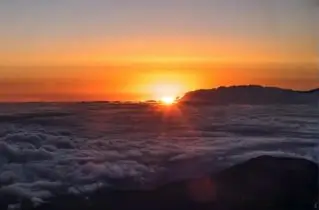
About 45 minutes beyond Paucartambo lies Tres Cruces, a viewpoint perched on the edge of the Andes where the mountains drop abruptly into the Amazon basin below. During certain months typically May, June, and July atmospheric conditions can produce a rare optical phenomenon at sunrise: the sun appears to multiply, flatten, or glow in unusual colors as it rises above the cloud sea of the Amazon lowlands.
Travelers usually depart in the middle of the night from Cusco or Paucartambo to reach Tres Cruces before dawn. The viewpoint offers one of the most dramatic panoramas in southern Peru: an unbroken transition from cold Andean peaks to the warm, humid expanse of the Manu jungle stretching to the horizon.
The Gateway to Manu National Reserve
Beyond its festivals, Paucartambo holds a unique geographic significance: it is widely considered the gateway to Manu National Reserve, one of the most biodiverse protected areas on Earth and one of Peru's most treasured natural reserves. The overland route into Manu passes directly through Paucartambo before descending through cloud forest ecosystems and eventually into lowland Amazon rainforest.
This transition zone, from Andean town to cloud forest to tropical lowland, means that travelers heading to Manu experience a rare cross-section of Peru's ecological diversity in a single journey, all beginning in the streets of this small colonial town.
Climate in Paucartambo
Sitting at close to 2,900 meters above sea level, Paucartambo enjoys a mild Andean valley climate, generally milder than Cusco city due to its lower elevation and proximity to the eastern cloud forest. Days are often pleasantly warm, while nights can turn cool, especially during the dry season.
The dry season (May to September) brings clearer skies and is the most popular time to visit, coinciding with both the Virgen del Carmen festival in July and the best conditions for viewing the Tres Cruces sunrise phenomenon. The wet season (November to March) brings more frequent rainfall and lush greenery, as moisture from the nearby Amazon basin moves up the valley.
Frequently Asked Questions about Paucartambo
How far is Paucartambo from Cusco?
Paucartambo is located about 110 kilometers (68 miles) east of Cusco, and the drive typically takes 3 to 4 hours along a paved mountain highway.
When is the Virgen del Carmen festival?
The festival takes place every year from July 15th to 18th, with the main procession and the rooftop Saqra dances occurring on July 16th.
What is the "guerrilla" performed in Paucartambo?
It is a symbolic reenactment staged in the town's cemetery and streets during the festival, evoking historical conflict through costumed choreography and ritual performance.
Can I visit Tres Cruces from Paucartambo?
Yes, the viewpoint is about 45 minutes further along the same road, and is often visited as an early-morning excursion from Paucartambo or Cusco to catch the sunrise phenomenon.
Is Paucartambo a good starting point for a trip to Manu?
Yes, Paucartambo is the main overland gateway to Manu National Reserve, and the road that continues past the town leads directly into the cloud forest and jungle region.
What is the altitude of Paucartambo?
Paucartambo sits at approximately 2,906 meters (9,534 feet) above sea level, somewhat lower than Cusco city.



 Easy
Easy